

80–100 TPD Lime Rotary Kiln Production Line Project in Nigeria
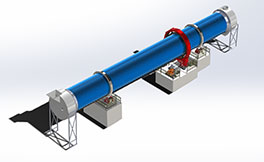
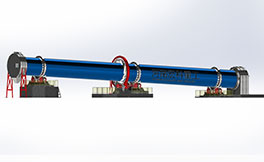
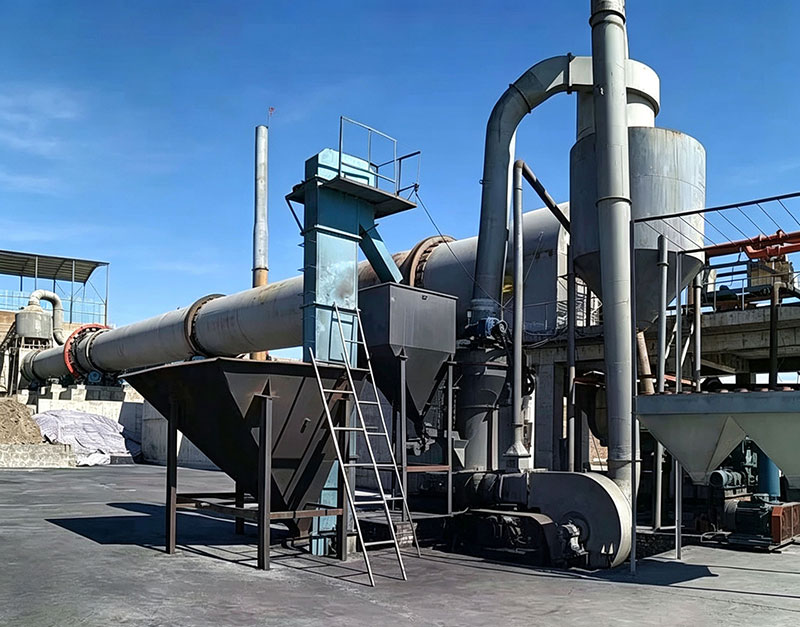
Henan Hongke Heavy Machinery Co., Ltd. presents a lime production project in Nigeria featuring a Φ2.5×40m Lime Rotary Kiln, designed to produce 80–100 tons of finished lime per day.
As the core thermal processing equipment, the Lime Rotary Kiln plays a critical role in converting limestone into finished lime through controlled high-temperature calcination. The production line is designed around the required finished product output, raw material characteristics, and operating conditions.
This project demonstrates the application of industrial rotary kiln technology in small-to-medium-scale lime production. By coordinating the kiln with material feeding, heating, cooling, conveying, and other supporting systems, a Lime Rotary Kiln Production Line can provide an integrated solution for continuous limestone calcination.
1. Project Overview: Lime Rotary Kiln Production Line in Nigeria
Located in Nigeria, this project features a Φ2.5×40m industrial Lime Rotary Kiln with a designed daily finished lime output of 80–100 tons.
The rotary kiln is the central equipment in the calcination section. Its rotating cylindrical structure allows limestone to move gradually through the kiln while being exposed to the required thermal conditions. During this process, limestone undergoes calcination and is converted into lime.
The kiln dimensions and production requirements are important factors in determining the operating conditions and supporting equipment configuration. The entire production system needs to work together to maintain stable material feeding, uniform heating, effective cooling, and reliable finished product handling.
Project Specifications
| Item | Project Details |
|---|---|
| Project Location | Nigeria |
| Project Type | Lime Rotary Kiln Production Line |
| Main Equipment | Lime Rotary Kiln |
| Rotary Kiln Model | Φ2.5×40m |
| Daily Finished Lime Output | 80–100 TPD |
| Raw Material | Limestone |
| Main Application | Limestone Calcination and Lime Production |
| Equipment Manufacturer | Henan Hongke Heavy Machinery Co., Ltd. |
Production Capacity Clarification: The 80–100 TPD figure refers to the daily output of finished lime, not the daily limestone feeding or raw material processing capacity. The actual raw material consumption depends on limestone quality, chemical composition, moisture content, calcination conditions, and production losses.
2. Φ2.5×40m Lime Rotary Kiln: Core Equipment for Lime Calcination
The Φ2.5×40m Lime Rotary Kiln is the key thermal processing unit in this Nigeria project. It provides the working space and thermal environment required for continuous limestone calcination.
A rotary kiln generally consists of a long, slightly inclined cylindrical shell supported by a mechanical support system. During operation, the kiln rotates continuously, allowing limestone to move from the feeding end toward the discharge end.
As the material travels through the kiln, it is heated to the required calcination temperature. Under suitable thermal conditions, calcium carbonate in limestone decomposes into calcium oxide and carbon dioxide.
The main chemical reaction is:
CaCO₃ → CaO + CO₂
The resulting calcium oxide is commonly known as quicklime. The quality of the finished lime is influenced by limestone composition, particle size, heating conditions, material residence time, and cooling conditions.
Key Functions of the Lime Rotary Kiln
1. Continuous Material Movement
The rotating kiln body helps limestone move gradually through the calcination zone, supporting continuous material processing.
2. High-Temperature Calcination
The kiln provides the thermal environment required for the decomposition of calcium carbonate and the production of lime.
3. Controlled Heating Conditions
The heating system and kiln operating parameters need to be coordinated to achieve suitable calcination conditions and consistent product quality.
4. Industrial Production Capability
With a Φ2.5×40m structure, the kiln is configured for the production requirements of this project, targeting 80–100 tons of finished lime per day.
5. Integration with Supporting Equipment
The kiln works together with feeding, cooling, conveying, dust collection, and other auxiliary systems to form a complete lime production process.
Selecting a suitable Lime Rotary Kiln requires more than considering its diameter and length. Limestone characteristics, required lime quality, fuel conditions, production capacity, and environmental requirements must also be evaluated during equipment selection.
3. How Does a Lime Rotary Kiln Production Line Work?
A Lime Rotary Kiln Production Line is an integrated system for transforming limestone into finished lime. The rotary kiln performs the main calcination operation, while supporting equipment handles raw material preparation, feeding, cooling, conveying, and product collection.
For this Nigeria project, the production line is centered on the Φ2.5×40m Lime Rotary Kiln. The actual auxiliary equipment configuration should be matched to the raw material properties, fuel conditions, site layout, and required finished product specifications.
Main Processing Stages
Stage 1: Limestone Preparation
Limestone is prepared before entering the rotary kiln. Depending on the incoming particle size and raw material conditions, the preparation section may include crushing, screening, and storage equipment.
Proper particle size control helps improve material feeding stability and supports more uniform heat transfer during calcination.
Stage 2: Raw Material Feeding
Prepared limestone is delivered to the kiln feeding system through suitable conveying and feeding equipment.
Stable and uniform feeding is important for maintaining a consistent material flow inside the rotary kiln. The feeding rate should be coordinated with kiln rotation speed, thermal conditions, and target production output.
Stage 3: Limestone Calcination in the Rotary Kiln
The Lime Rotary Kiln is the core processing unit of the production line.
As the kiln rotates, limestone gradually moves through the high-temperature zone. When the material reaches the required calcination conditions, calcium carbonate decomposes into calcium oxide and carbon dioxide.
This is the key stage in the production of finished lime.
Stage 4: Finished Lime Cooling
After calcination, the hot lime is discharged from the rotary kiln and transferred to a suitable cooling system.
Cooling reduces the material temperature before subsequent conveying, storage, or handling. The cooling equipment should be selected according to the production capacity and finished product requirements.
Stage 5: Dust Collection and Material Handling
Dust collection and gas treatment systems help manage dust generated during material preparation, kiln operation, cooling, and conveying.
The finished lime is then transported to the designated storage or downstream handling section. Depending on the plant design, this section may include conveying, screening, storage, and packaging equipment.
Typical Lime Production Process Flow
Limestone → Crushing and Screening → Raw Material Feeding → Lime Rotary Kiln Calcination → Lime Cooling → Conveying and Storage → Finished Lime
The specific equipment arrangement and process flow should be determined according to the project's technical requirements. Not every lime production line requires exactly the same auxiliary equipment configuration.
4. Important Factors in Designing an 80–100 TPD Lime Rotary Kiln Production Line
A successful lime production project depends on the coordination of the main kiln and its supporting systems. For a production line targeting 80–100 tons of finished lime per day, equipment selection should consider the complete production process rather than the rotary kiln alone.
Limestone Quality and Particle Size
The chemical composition of limestone directly affects the quality of the finished lime. Calcium carbonate content, impurities, moisture, and particle size are important factors during process design.
Consistent raw material quality helps improve the stability of the calcination process.
Kiln Dimensions and Production Requirements
The Φ2.5×40m Lime Rotary Kiln is the main thermal processing equipment in this Nigeria project.
Kiln dimensions, feeding rate, rotation speed, inclination, and material residence time must be considered together to match the target finished lime output.
Calcination Temperature and Heating System
Limestone calcination requires suitable high-temperature conditions. The heating system should provide sufficient and stable heat according to the selected fuel and process requirements.
Temperature monitoring and operating control are important for maintaining appropriate calcination conditions.
Cooling and Finished Product Handling
The temperature of discharged lime must be reduced to a suitable level before downstream handling. Cooling capacity and conveying equipment should be coordinated with the kiln's discharge rate.
Proper handling also helps reduce material loss and improve the overall operation of the production line.
Dust Collection and Environmental Considerations
Dust collection and exhaust gas treatment should be considered during the overall plant design. Equipment selection depends on dust characteristics, gas composition, local environmental regulations, and the operating conditions of the production line.
5. Why Choose Henan Hongke for Lime Rotary Kiln Equipment?
Henan Hongke Heavy Machinery Co., Ltd. focuses on industrial rotary kiln equipment and customized production line solutions for mineral processing and industrial thermal treatment applications.
For lime production projects, selecting the right equipment requires an understanding of limestone characteristics, finished product requirements, fuel conditions, and the production capacity of the entire plant.
Henan Hongke focuses on the following aspects when developing lime rotary kiln solutions:
Project-Based Equipment Selection
Equipment selection considers the target finished lime output, raw material characteristics, process conditions, and site requirements.
Customized Rotary Kiln Solutions
Rotary kiln dimensions and supporting equipment can be considered according to the specific requirements of each project.
Complete Production Line Coordination
A Lime Rotary Kiln Production Line requires coordinated operation between raw material preparation, feeding, calcination, cooling, dust collection, and finished product handling.
Industrial Equipment Manufacturing
Henan Hongke manufactures and supplies rotary kilns and related heavy machinery for industrial production applications.
One-Stop Solution for Mining Machinery
From equipment selection to production line configuration, Henan Hongke provides solutions based on customers' project requirements.
The Nigeria project, featuring a Φ2.5×40m Lime Rotary Kiln with a designed daily finished lime output of 80–100 tons, is an example of the application of Henan Hongke's rotary kiln equipment in industrial lime production.
6. Looking for a Lime Rotary Kiln or Complete Lime Production Line?
Choosing a suitable Lime Rotary Kiln requires a clear understanding of your limestone quality, required finished lime output, fuel conditions, and production site requirements.
Henan Hongke Heavy Machinery Co., Ltd. provides industrial rotary kiln equipment and customized Lime Rotary Kiln Production Line solutions for customers worldwide.
To help evaluate your project, please prepare the following information:
Required finished lime output in tons per day
Limestone chemical composition and quality
Raw limestone particle size and moisture content
Available fuel type and energy conditions
Required finished lime specifications
Project location and site conditions
Based on these details, the appropriate rotary kiln dimensions, supporting equipment, and production line configuration can be evaluated.
Contact Henan Hongke Heavy Machinery Co., Ltd. to discuss your lime production project and explore a suitable rotary kiln solution.
Henan Hongke Heavy Machinery Co., Ltd.
Your One-Stop Solution for Mining Machinery.