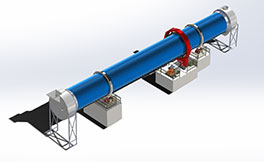
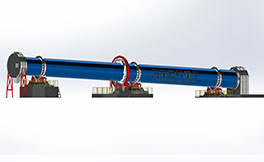
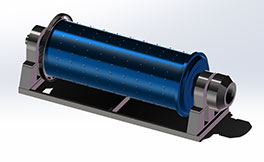
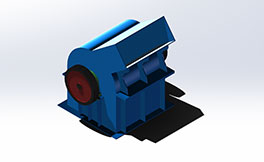
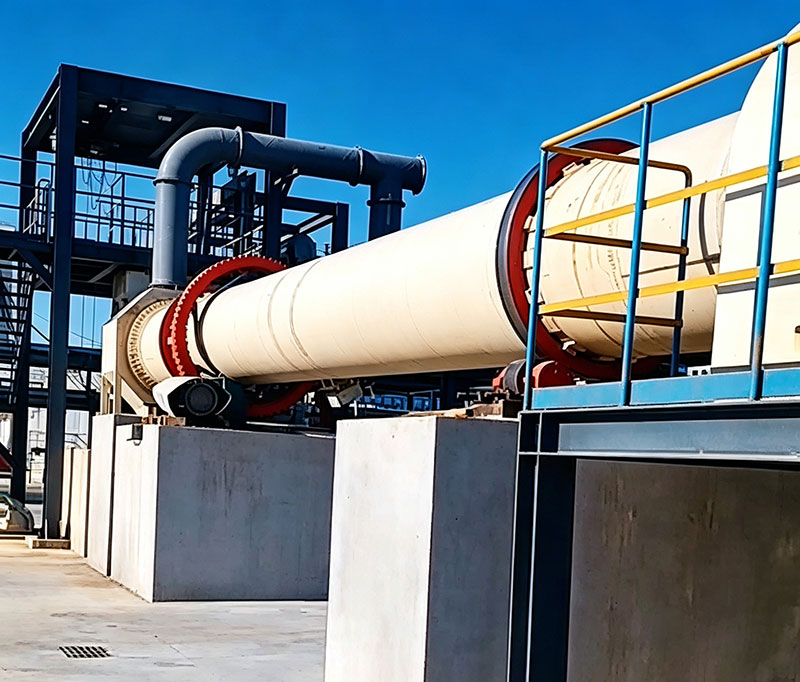
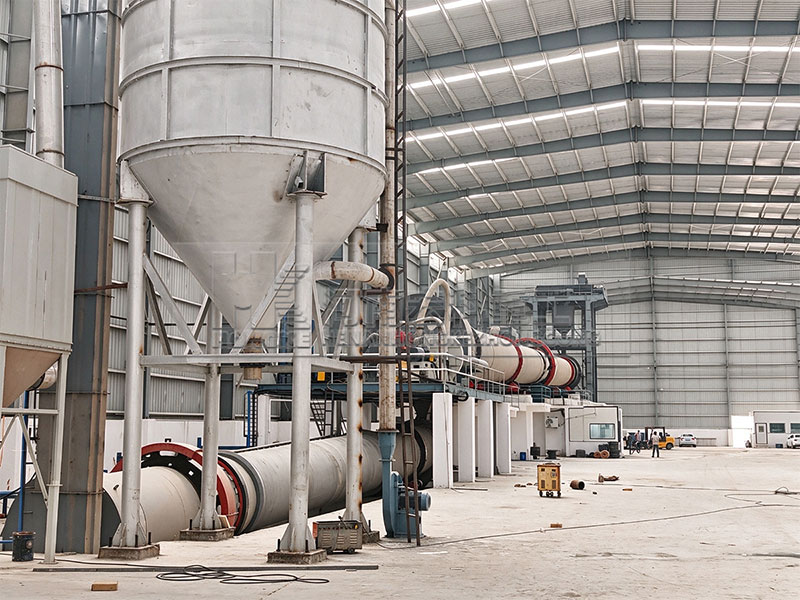
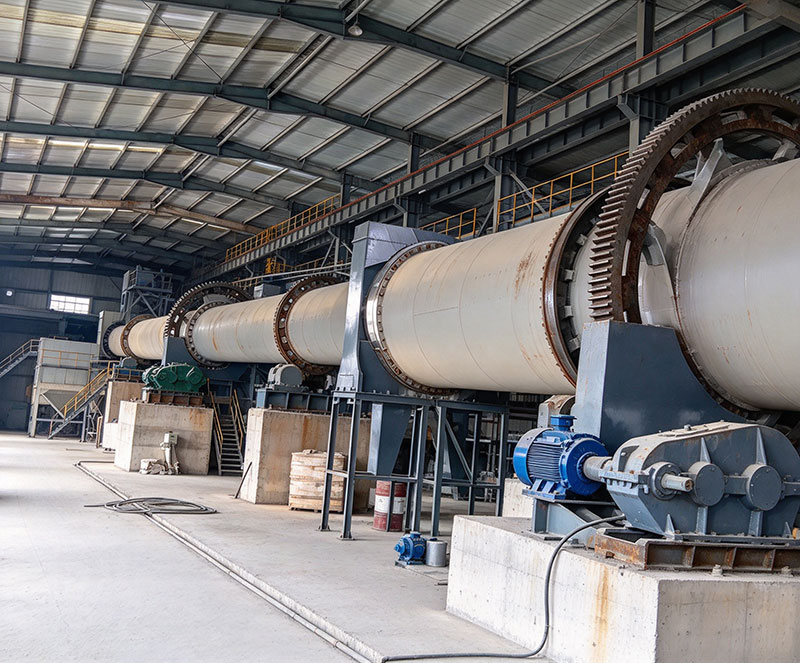
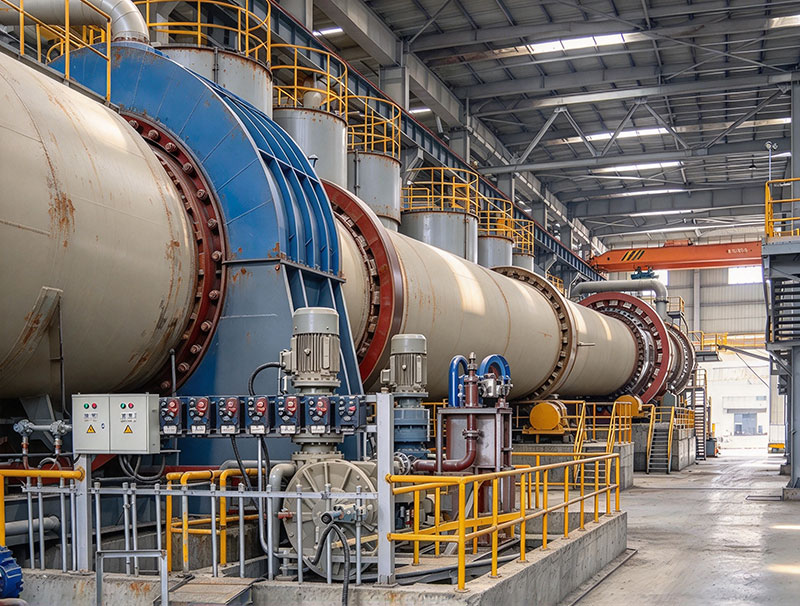
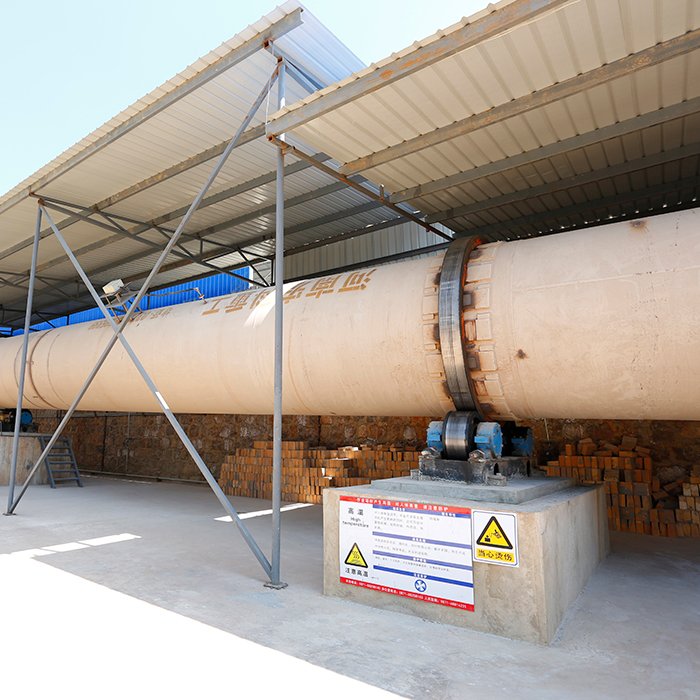
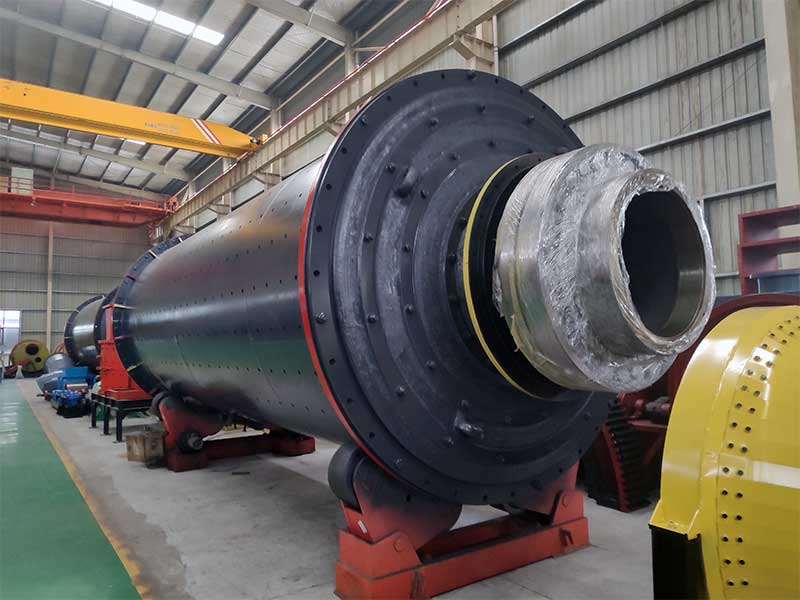
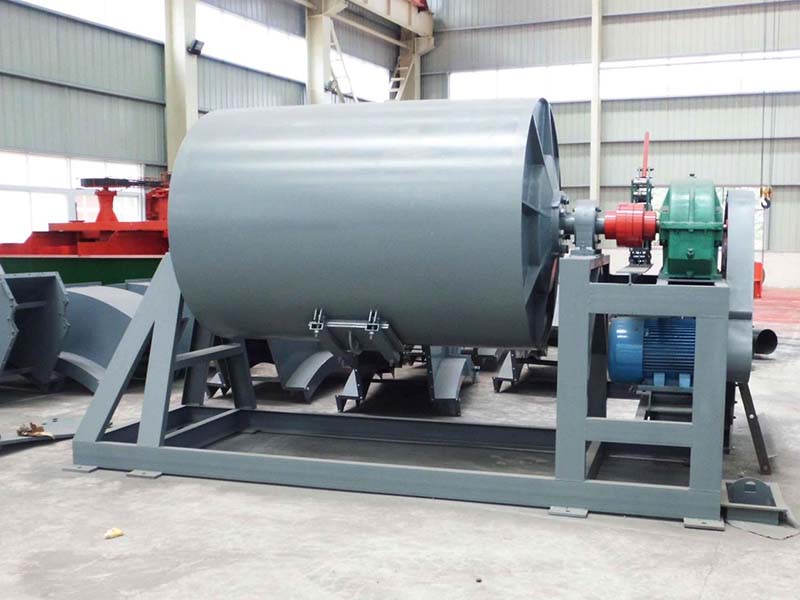
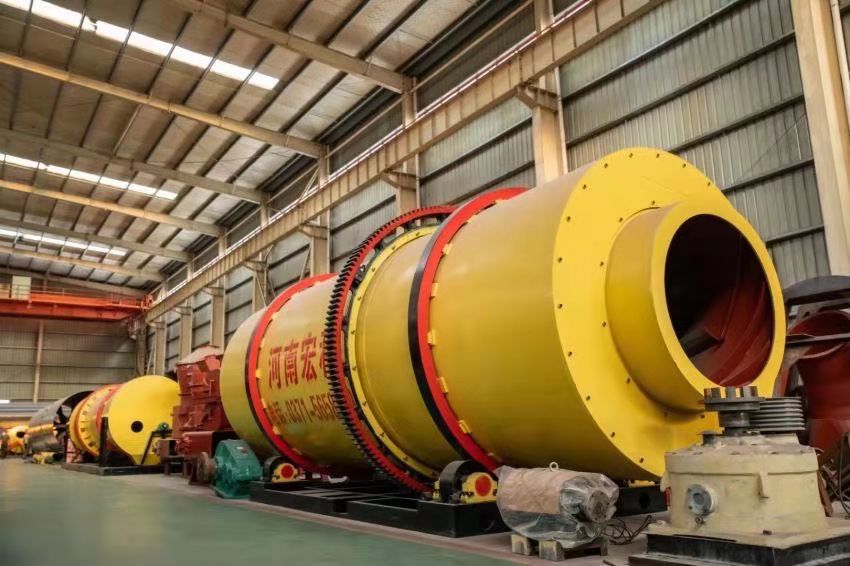
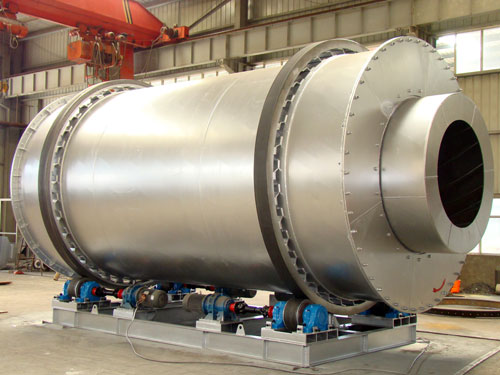
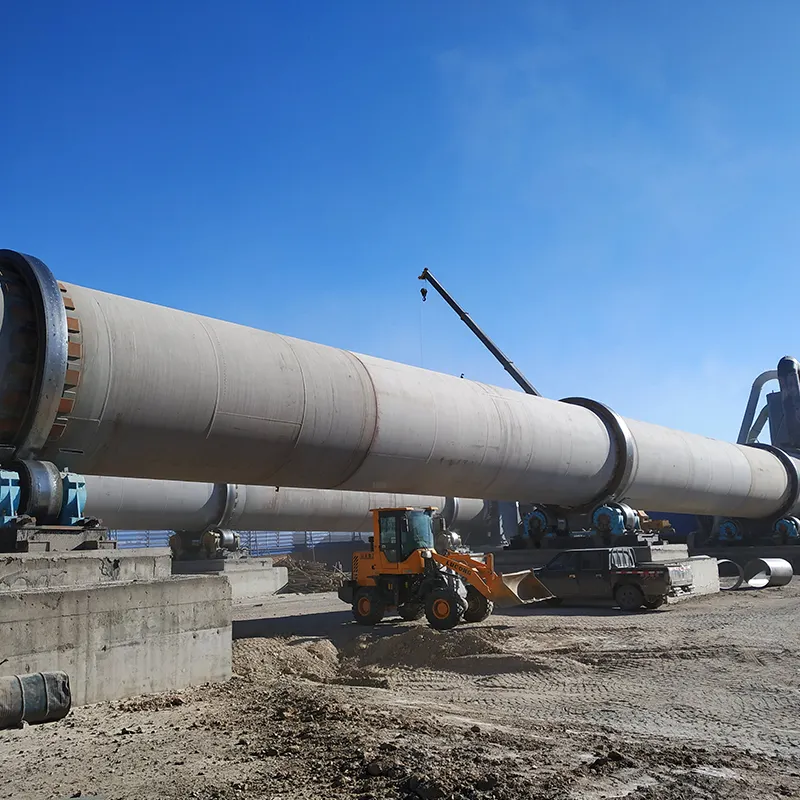
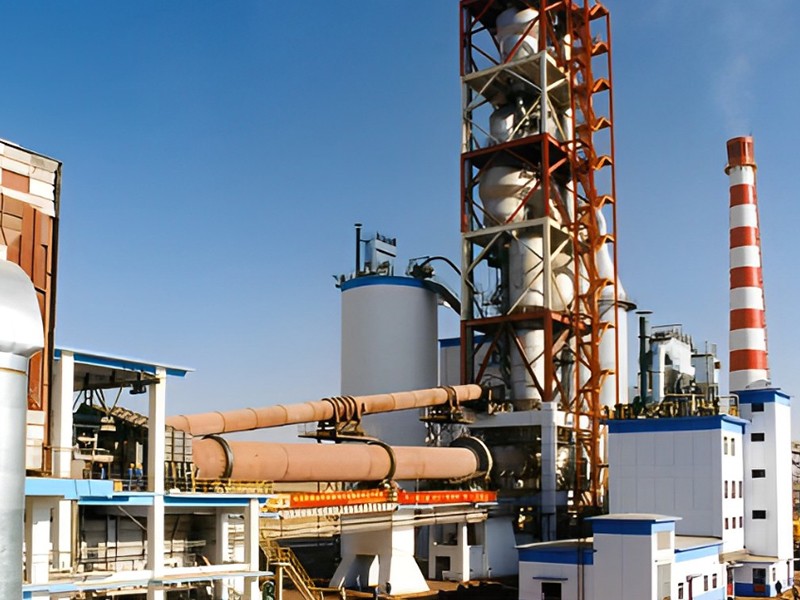
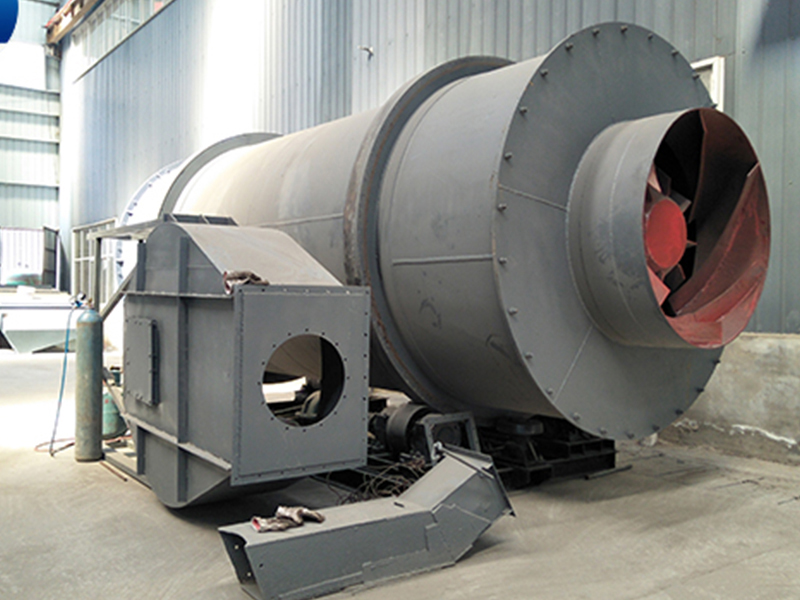
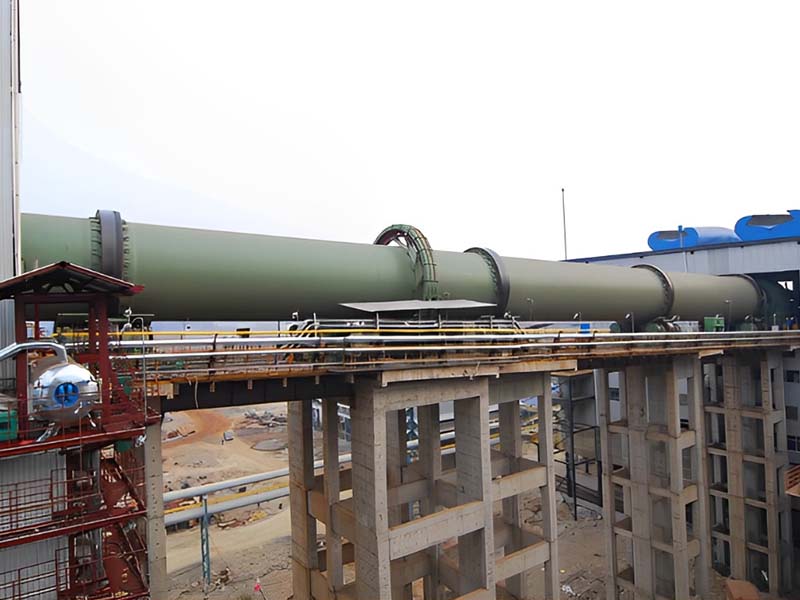
Hazardous Waste Rotary Kiln is the core incineration equipment for treating solid and hazardous waste. Through high-temperature rotary incineration, it achieves waste volume reduction and detoxification, and currently holds a relatively high market share. Solid waste refers to solid and semi-solid waste materials generated by human activities in production, consumption, daily life, and other processes. Solid waste treatment equipment—currently popular and widely used both internationally and domestically—is the solid waste incineration rotary kiln, which is optimized based on the traditional rotary calcining kiln.
Working Principle of the Solid Waste Incineration Rotary Kiln
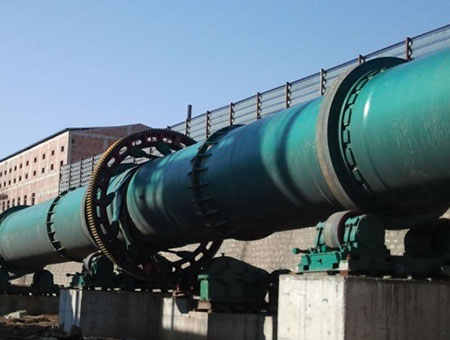
The furnace body of the solid waste incineration rotary kiln is a cylindrical drum lined with refractory bricks or water-cooled wall panels. Through the overall rotation of the furnace body, the waste is uniformly mixed and moves in a tumbling state toward the inclined end along the slope angle. To achieve complete incineration, a secondary combustion chamber is generally provided. Its unique structure enables the processes of waste drying, volatile matter release, ignition, and complete burn-out through several heat transfer modes, and achieves full incineration in the secondary combustion chamber. The solid waste incineration rotary kiln has strong adaptability to changes in incineration materials, and is particularly capable of burning special wastes with relatively high moisture content.
What Types of Waste Can Be Processed?
This equipment is highly adaptable and can simultaneously treat solid, liquid, and gaseous wastes. Common treatment targets include waste oil, sludge, waste liquids, solid wastes containing high glass or silicon content, as well as industrial solid wastes such as waste acids, waste alkalis, and heavy metal sludge. Municipal sludge, river sludge, electroplating sludge, scrap tires, paint residues, and the like can all be processed. However, explosive wastes are not suitable for incineration treatment, and wastes with uncertain chemical characteristics are, in principle, refused for acceptance.
Types of Waste Suitable for the Hazardous Waste Rotary Kiln:
(1) Various industrial hazardous waste residues, medical waste, domestic waste, etc.;
(2) Various sludges, slurries, ointments, plastics, rubber, grease residues, asphalt, and other polymer wastes;
(3) High-concentration waste liquids, wastewater, and waste solvents.
Technical Features of the Hazardous Waste Rotary Kiln Incineration System:
(1) Wide adaptability to waste
The Hazardous Waste Rotary Kiln can accept both solid and liquid feeds separately; it can handle solid and liquid wastes of various shapes; it can process materials with low melting points; it can directly feed drum-contained or large lump solid wastes into the kiln; and it automatically adjusts the kiln rotation speed, air supply volume, and feed rate to control the combustion conditions. Therefore, it has strong adaptability to wastes with different physical compositions and can withstand fluctuations in waste morphology (viscosity, moisture, particle size), calorific value, feed rate, and other conditions.
(2) Reliable operation
Due to the unique design of the furnace body and combustion chamber structure of the Hazardous Waste Rotary Kiln, with no moving parts inside, combined with the use of high-temperature-resistant materials, there are no issues of wear or high-temperature damage to components, allowing for long-term continuous operation.
(3) Low operation and maintenance costs
Because the Hazardous Waste Rotary Kiln has a reliable structure and no moving machinery inside the combustion chamber, its manufacturing and maintenance costs are relatively low. Compared with other kiln types, it consumes less power, produces lower noise, and is more energy-efficient. The refractory brick lining inside the combustion chamber requires periodic maintenance approximately once a year, while routine maintenance is only needed for the external power components on a day-to-day basis.
(4) High degree of automation
In addition to a highly automated monitoring and control system, the Hazardous Waste Rotary Kiln is also equipped with a manual control backup and monitors, allowing for operational supervision from the control room. During operation, the computer automatically adjusts the pusher frequency to control the waste feed rate, adjusts the kiln rotation speed to control the residence time of waste in the kiln (0.5–1 hour), and adjusts the air supply volume and burner on/off to control the combustion temperature. Through dynamic computer control of the actuators, the optimal incineration effect is achieved. The high degree of automation results in low labor intensity for workers.
How to Choose the Right Equipment Without Pitfalls
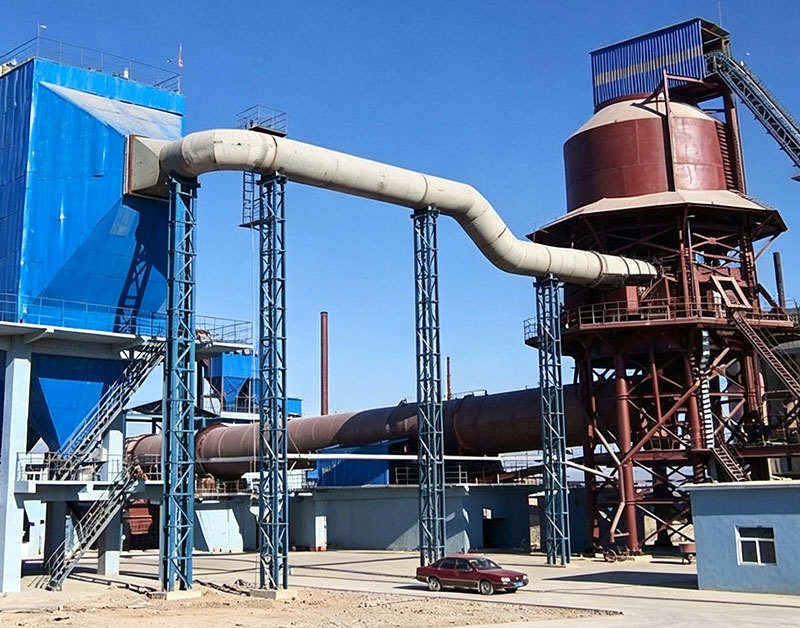
Rotary kiln incineration technology is mature, simple to operate, and stable in operation, but it has relatively high investment costs and a long construction period. When selecting equipment, attention should be paid to the fact that the incineration temperature is generally controlled at 850°C–1050°C, and the secondary combustion chamber temperature should be greater than 1100°C. The flue gas treatment system should be equipped with a waste heat boiler, quench tower, baghouse filter, and other components to ensure that emissions of dust, sulfur dioxide, nitrogen oxides, and dioxins meet standards. Hazardous wastes from different sources have significantly different combustion characteristics, so scientific proportioning and blending are required before feeding into the incineration system to avoid process fluctuations that could affect stable operation. If you are interested in specific equipment models and prices, please feel free to contact us.
| Product specifications(m) | Kiln dimensions | Capacity(t/d) | Rotation speed(r/min) | Motor power(kw) | Total weight(t) | Note |
| Diameter(m) | Length(m) | Obliquity(%) |
| Φ2.5×40 | 2.5 | 40 | 3.5 | 180 | 0.44-2.44 | 55 | 149.61 | Kiln with shaft cyclone preheater |
| Φ2.5×50 | 2.5 | 50 | 3 | 200 | 0.62-1.86 | 55 | 187.37 | ---- |
| Φ2.5×54 | 2.5 | 54 | 3.5 | 204 | 0.48-1.45 | 55 | 196.29 | ---- |
| Φ2.7×42 | 2.7 | 42 | 3.5 | 320 | 0.10-1.52 | 55 | 198.5 | ---- |
| Φ2.8×44 | 2.8 | 44 | 3.5 | 400 | 0.437-2.18 | 55 | 201.58 | Outside disassemble kiln |
| Φ3.0×45 | 3 | 45 | 3.5 | 500 | 0.5-2.47 | 75 | 210.94 | ---- |
| Φ3.0×48 | 3 | 48 | 3.5 | 700 | 0.6-3.48 | 100 | 237 | Outside disassemble kiln |
| Φ3.0×60 | 3 | 60 | 3.5 | 300 | 0.3-2 | 100 | 310 | Alumyte-alumina forge kiln |
| Φ3.2×50 | 3.2 | 50 | 4 | 1000 | 0.6-3 | 125 | 278 | Outside disassemble kiln |
| Φ3.3×52 | 3.3 | 52 | 3.5 | 1300 | 0.266-2.66 | 125 | 283 | Kiln with preheater precalcine |
| Φ3.5×54 | 3.5 | 54 | 3.5 | 1500 | 0.55-3.4 | 220 | 363 | Kiln with preheater precalcine |
| Φ3.6×70 | 3.6 | 70 | 3.5 | 1800 | 0.25-1.25 | 125 | 419 | Generating kiln for using ofterheat |
| Φ4.0×56 | 4 | 56 | 4 | 2300 | 0.41-4.07 | 315 | 456 | Kiln with preheater precalcine |
| Φ4.0×60 | 4 | 60 | 3.5 | 2500 | 0.396-3.96 | 315 | 510 | Kiln with preheater precalcine |
| Φ4.2×60 | 4.2 | 60 | 4 | 2750 | 0.4-3.98 | 375 | 633 | Kiln with preheater precalcine |
| Φ4.3×60 | 4.3 | 60 | 3.5 | 3200 | 0.396-3.96 | 375 | 583 | Kiln with preheater precalcine |
| Φ4.5×66 | 4.5 | 66 | 3.5 | 4000 | 0.41-4.1 | 560 | 710.4 | Kiln with preheater precalcine |
| Φ4.7×74 | 4.7 | 74 | 4 | 4500 | 0.35-4 | 630 | 849 | Kiln with preheater precalcine |
| Φ4.8×74 | 4.8 | 74 | 4 | 5000 | 0.396-3.96 | 630 | 899 | Kiln with preheater precalcine |
| Φ5.0×74 | 5 | 74 | 4 | 6000 | 0.35-4 | 710 | 944 | Kiln with preheater precalcine |
| Φ5.6×87 | 5.6 | 87 | 4 | 8000 | Max4.23 | 800 | 1265 | Kiln with preheater precalcine |
| Φ6.0×95 | 6 | 95 | 4 | 10000 | Max5 | 950×2 | 1659 | Kiln with preheater precalcine
|