
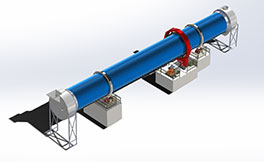
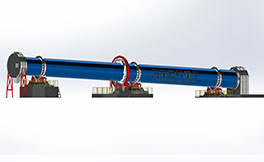
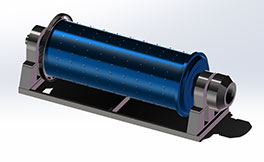
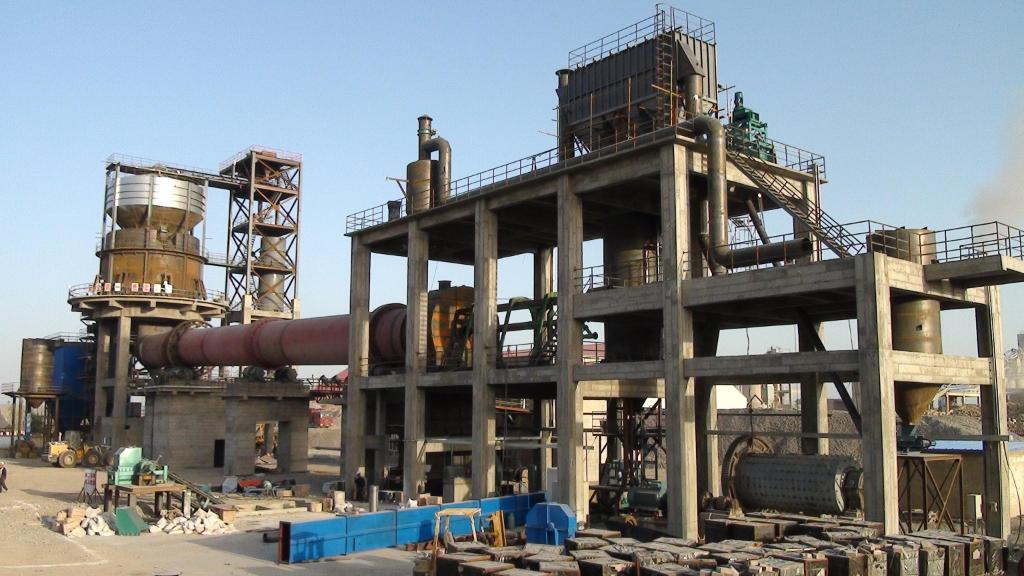
Henan Hongke Heavy Machinery Co., Ltd. ("Henan Hongke Machinery") has designed, manufactured, and delivered a complete magnesium metal rotary kiln production line for a client in Henan Province, China — the heartland of China's magnesium metal industry. The system is engineered to calcine dolomite ore at high temperatures, producing the active calcined dolomite (CaO·MgO) feedstock required for magnesium metal extraction through the silicothermic (Pidgeon) process.
This project addresses the critical first step in magnesium metal production: the calcination of raw dolomite. The quality and consistency of the calcined dolomite directly determines the yield, energy efficiency, and overall economics of the downstream magnesium reduction process.
Background: China's Magnesium Metal Industry
China produces approximately 85–90% of the world's primary magnesium metal, with Henan, Shaanxi, Shanxi, and Inner Mongolia as the major production provinces. The Pidgeon process — a silicothermic reduction method — dominates Chinese magnesium production, accounting for over 90% of output.
In this process, calcined dolomite is mixed with ferrosilicon (FeSi) and flux, loaded into nickel-chromium steel retorts, and heated under vacuum at approximately 1,200 °C. The silicon in the ferrosilicon reduces magnesium oxide to metallic magnesium vapor, which condenses on a cooled collector inside the retort as high-purity magnesium crystal (99.9%+ Mg).
The dolomite calcination step — performed in the rotary kiln — is where the quality of the entire magnesium production chain begins. Poorly calcined dolomite (with high loss on ignition, low activity, or inconsistent chemistry) directly reduces magnesium yield and increases energy consumption in the retort furnaces.
Why a Rotary Kiln for Dolomite Calcination?
Dolomite (CaCO₃·MgCO₃) must be calcined at 1,100–1,250 °C to decompose both the calcium and magnesium carbonates:
CaCO₃·MgCO₃ → CaO·MgO + 2CO₂
The resulting product — calcined dolomite (also called "dolime" or "doloma") — must meet strict quality specifications for use in magnesium reduction:
The rotary kiln is the preferred calcination equipment for medium to large magnesium producers because it offers:
- Continuous operation — unlike shaft kilns with batch cycles
- Uniform calcination — rotating action ensures all particles are evenly exposed to heat
- Scalability — from small (φ1.6 m) to large (φ3.5 m+) diameters
- Precise temperature control — adjustable flame intensity and kiln speed for optimal calcination quality
- Fuel flexibility — coal, natural gas, or mixed fuel firing
Equipment Specification
The rotary kiln system delivered by Henan Hongke Machinery has the following specifications:
Complete System Scope
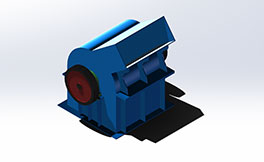
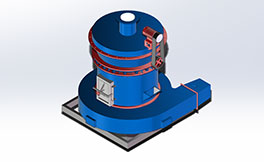
The Henan Hongke Machinery delivery includes the following integrated subsystems:
Design Highlights for Dolomite Calcination
Optimized Kiln Length-to-Diameter Ratio
The φ2.5 × 50 m dimensions provide an L/D ratio of 20 — specifically proportioned for dolomite calcination. This ratio ensures:
- Adequate residence time (30–60 minutes) for complete calcination at the design throughput
- A sufficiently long high-temperature zone (burning zone) for full decomposition of both CaCO₃ and MgCO₃
- A proper preheat zone to gradually raise the dolomite temperature and prevent thermal shock cracking
Refractory Lining for Calcination Temperatures
The refractory lining is specifically specified for dolomite calcination service:
The refractory specification accounts for the specific chemical environment of dolomite calcination — the CaO content in calcined dolomite is highly corrosive to certain refractory types, and the wrong brick selection can result in rapid lining failure.
Multi-Channel Burner with Precise Flame Control
The kiln is equipped with a multi-channel coal/gas burner delivering a long, adjustable flame that provides:
- Uniform heat distribution along the burning zone
- Precise temperature control (±20 °C in the burning zone)
- Low NOx formation through staged combustion
- Fuel flexibility — primary coal with natural gas backup or co-firing
Internal Heat Exchange Enhancement
The kiln interior is fitted with lifters and dams in the preheat zone to improve heat transfer between the hot gas and the dolomite feed. These features increase the effective heat exchange surface area and reduce the required gas temperature at the kiln tail — improving overall thermal efficiency.
Working Principle
The dolomite calcination process in the rotary kiln follows a well-defined thermal sequence:
Stage 1: Preheating (Feed End, 100–800 °C)
Raw dolomite enters the elevated end of the inclined kiln. As the drum rotates, the dolomite is gradually heated by the counter-current hot exhaust gas. Surface moisture is driven off and the dolomite temperature rises progressively.
Stage 2: Calcination (Middle Section, 800–1,150 °C)
This is where the primary chemical reaction occurs. Both carbonate components decompose endothermically:
- MgCO₃ → MgO + CO₂ (begins at ~600 °C, rapid above 750 °C)
- CaCO₃ → CaO + CO₂ (begins at ~750 °C, rapid above 900 °C)
The CO₂ released creates a characteristic visible gas evolution as the dolomite "boils" in the kiln.
Stage 3: High-Temperature Soaking (Burning Zone, 1,150–1,250 °C)
The calcined dolomite passes through the burning zone where it is held at maximum temperature to ensure complete decomposition. This is critical: any residual carbonate (high LOI) in the calcined dolomite will reduce magnesium yield in the downstream retort process.
Stage 4: Discharge and Cooling
The fully calcined dolomite exits the kiln at the lower end and enters the cooler, where it is rapidly cooled from 1,100–1,200 °C to below 100 °C. Rapid cooling is important to prevent re-carbonation (re-absorption of CO₂) which would degrade the dolime quality.
Stage 5: Crushing and Screening
The cooled calcined dolomite is crushed to the required particle size (10–40 mm) for loading into the magnesium reduction retorts.
Process Control Parameters
Performance Results
Based on operating data from comparable installations:
Consistent quality of the calcined dolomite feedstock — achieved through the rotary kiln's uniform calcination — directly translates to higher magnesium yield and lower energy consumption in the downstream retort furnaces.
Environmental Protection
The kiln system incorporates the following environmental features:
Henan Hongke Machinery's Magnesium Kiln Range
Henan Hongke Machinery manufactures dolomite calcination rotary kilns across a wide capacity range for magnesium producers:
Every system is engineered for the client's specific dolomite chemistry, capacity target, and fuel type. Henan Hongke Machinery supplies the complete production line — from dolomite crushing through kiln calcination, cooling, and product handling — as a turnkey package.
Client Feedback
"The rotary kiln from Henan Hongke Machinery has significantly improved the quality and consistency of our calcined dolomite. The LOI is consistently below 1.5%, and the activity is above 350 mL — exactly what we need for our magnesium retort furnaces. The kiln runs reliably with minimal maintenance, and the engineering team was very professional throughout the project."
About Henan Hongke Heavy Machinery Co., Ltd.
Henan Hongke Heavy Machinery Co., Ltd., based in Henan Province, China, is a professional manufacturer of rotary kiln systems for magnesium, zinc oxide, cement, lime, and metallurgical applications. The company's production facility is equipped with plate rolling machines, CNC machining centers, welding stations, and quality control laboratories, enabling complete in-house manufacturing of all major kiln components.
Henan Hongke Machinery serves clients worldwide, providing engineering, manufacturing, shipping, installation supervision, commissioning, and after-sales support as an integrated service.